ON THIS PAGE
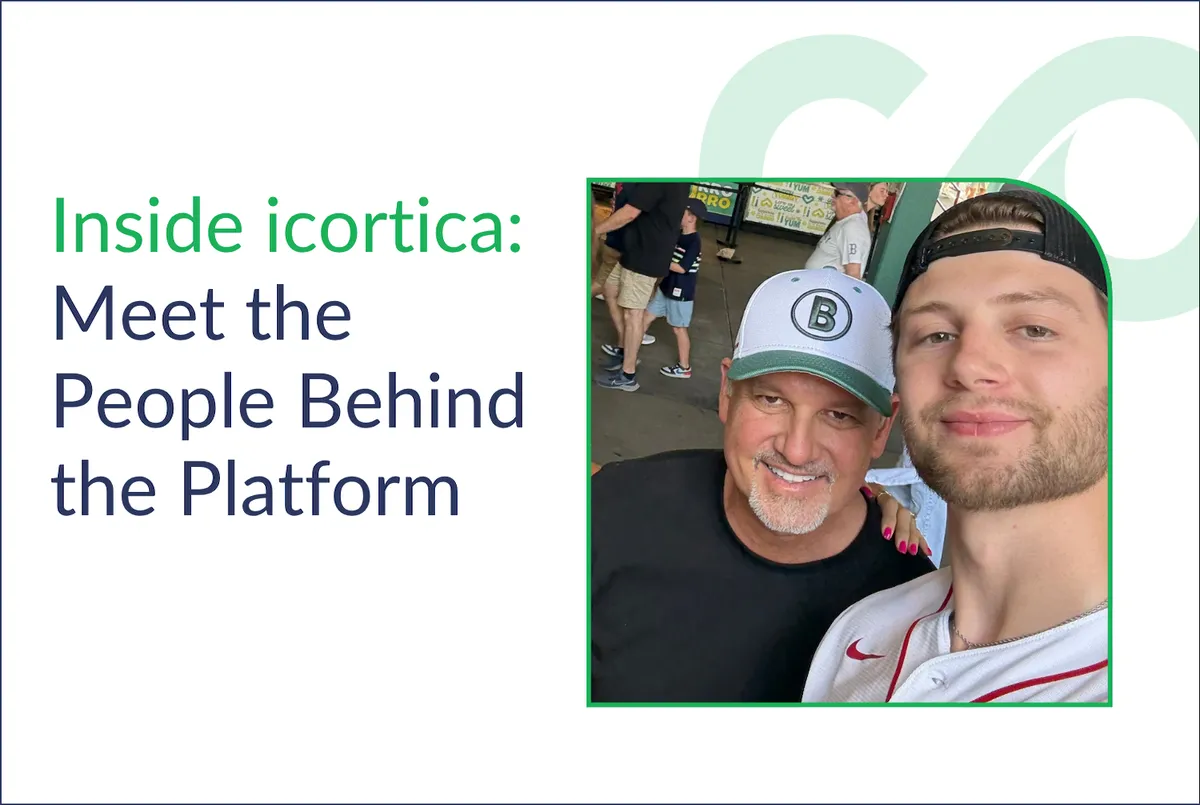
Landon Swartz spent six years growing his family’s dental lab, Diamondhead, before joining icortica as Head of Dental Business Development. I sat down with him to talk about where he started, what he learned, and why he decided to join icortica.
Tell me about your background and how you got into the dental industry.
I interned at my dad’s lab my last year of college where I was studying management information systems. When I got there, everything was running, but there wasn’t much visibility into the customer data or how well our processes were working. So I started digging into the numbers and changing how we looked at the business. It made a real impact in just those few months. I never planned on joining the family business. I was ready to go a different direction after graduating, but my dad said he didn’t know how to do this without me. That was hard to turn down. So I joined, and I stayed for about six years.
What’s a memory from the early days that sticks with you?
In my first six months, my dad Darin, my uncle Mike, and I drove five hours to St. George, Utah for a leadership retreat. We locked ourselves in a condo for three days with a whiteboard and sticky notes, mapping out where we wanted the lab to be in 12 months. Looking back, we exceeded all of those goals. That’s a pretty cool memory.
What did you learn from your father about running a lab that you still carry with you?
How he handled relationships. A dental lab is a relationship business. The doctor and their staff have to trust you completely with their patients’ care. My dad treated it like a true partnership, like being an extension of their staff. He genuinely wanted to see them succeed. Actually, there was this one case where he spoke directly with a patient about their recommended treatment plan. The doctor hadn’t been able to gain patient acceptance but my dad took an educational approach with them and it worked. This case brought in enough revenue to help save the practice, which was dealing with some financial issues at the time.
What were the biggest challenges of running the lab day to day?
Visibility was a big one early on. And everyone wears so many hats in a lab, especially on the admin side. You’re managing customer relationships, trying new sales strategies, keeping up with marketing, and staying on top of everything happening on the production floor, all while trying to grow and keep customers happy. It’s a lot.
You ended up leading a full LMS implementation. How did that come about?
I kept asking for reports that would help with sales and operations, and we just couldn’t get them out of our system. So we made the case for a new one that would actually give us the data we needed. I led the whole implementation and set the foundation for how we wanted things structured, since what was there before was a mess. It was actually good to start from scratch and build something we could scale with.
So what was the growth strategy once you had that visibility?
We’d recently launched removable and ortho departments but at the time about 90% of the business was still crown, bridge, and implants. So a big focus was cross-selling those new departments to existing customers. That worked really well. We quadrupled the removable department in a year. Ortho grew more slowly since we weren’t fully staffed for it yet.
The scanner program was another big driver. We put our own twist on it by bringing partners like Zest and ZimVie to the table with free product and promotions based on the volume doctors sent us. That was appealing to offices, and it helped drive revenue.
Continuing education mattered, too. We’d partner with oral surgeons, who’d invite their referring doctors to our courses. That became a great way to bring in new crown and bridge customers.
And we launched aligners as well. That took some time but was getting real traction in the last couple of years. It was an easy cross-sell since we already had the equipment, materials, and skills to make it.
Looking back, what would you have done differently?
If I’d had icortica, sales and marketing would have been so much easier. I spent a lot of time doing research and analysis by hand that the software could have automated. It would have made a huge difference for retention and cross-sell.
What brought you to icortica?
My fiancée got into law school in Boston, so we made the move. I stayed on with Diamondhead Dental Lab remotely for a few months, and that’s when I met Rob [Nazzal] and Freddy [Rapp] through some industry connections. I saw the icortica platform for the first time in that first conversation and was honestly blown away, and a little annoyed we didn’t have it at Diamondhead.
Now that you’re talking to labs every day, what’s surprised you?
That every lab has the same issues. When I was heads down at Diamondhead, I wondered if it was just us, or if our customers were unusually hard to work with. Turns out it’s the same story everywhere: same issues, same structure. That was surprising. Also just how nice everyone in this industry is to work with.
Diamondhead was actually the first GreatLab customer to get icortica. What was that like?
It’s been awesome to be part of that. I’m really glad Diamondhead has this software now, especially since I’m not there anymore. I know the team needed those analytics and something pushing them to act on the data. I’m excited to see the impact it has for them.
If you could go back and talk to yourself running the lab, what would you say?
Pay as much attention to the quiet accounts as the loud ones. Customers who complain are actually the easy ones. They’re telling you exactly what to fix. The accounts that hurt us were the doctors who never said a word and just slowly sent us less work. Silence isn’t satisfaction. Check in on the accounts you haven’t heard from in awhile.
Don’t get pulled into a race to the bottom on price. There’s always going to be a lab willing to do crowns five dollars cheaper. Believe in the value you bring to these offices. You’re not selling a product, you’re selling a partnership.
And the best lab isn’t always the one with the best margins or even the best technical work. It’s the one the doctor can actually reach, the one they trust, the one that calls before a case is late instead of waiting to be asked. If you’re the best communicator in your market, you’re going to be the best lab. I’d tell my younger self to obsess over that even more than I did.
What would you want other lab owners going through generational transitions to take away from your story?
Be open to the next generation’s perspective. My dad built the lab that got us there. My job was to build on top of that and take it further. Give the next generation room to test ideas and to work on the business, not just in it.